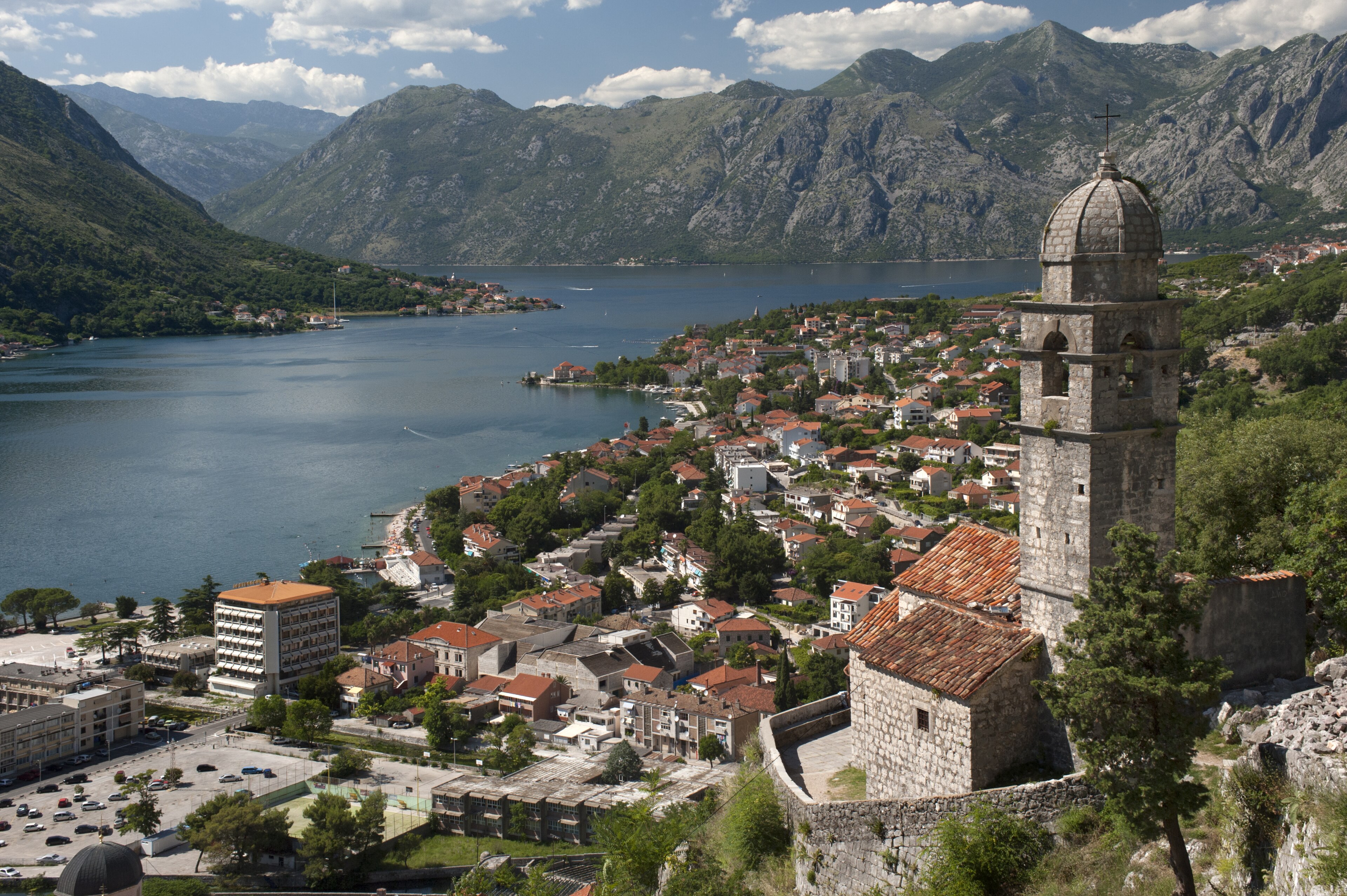
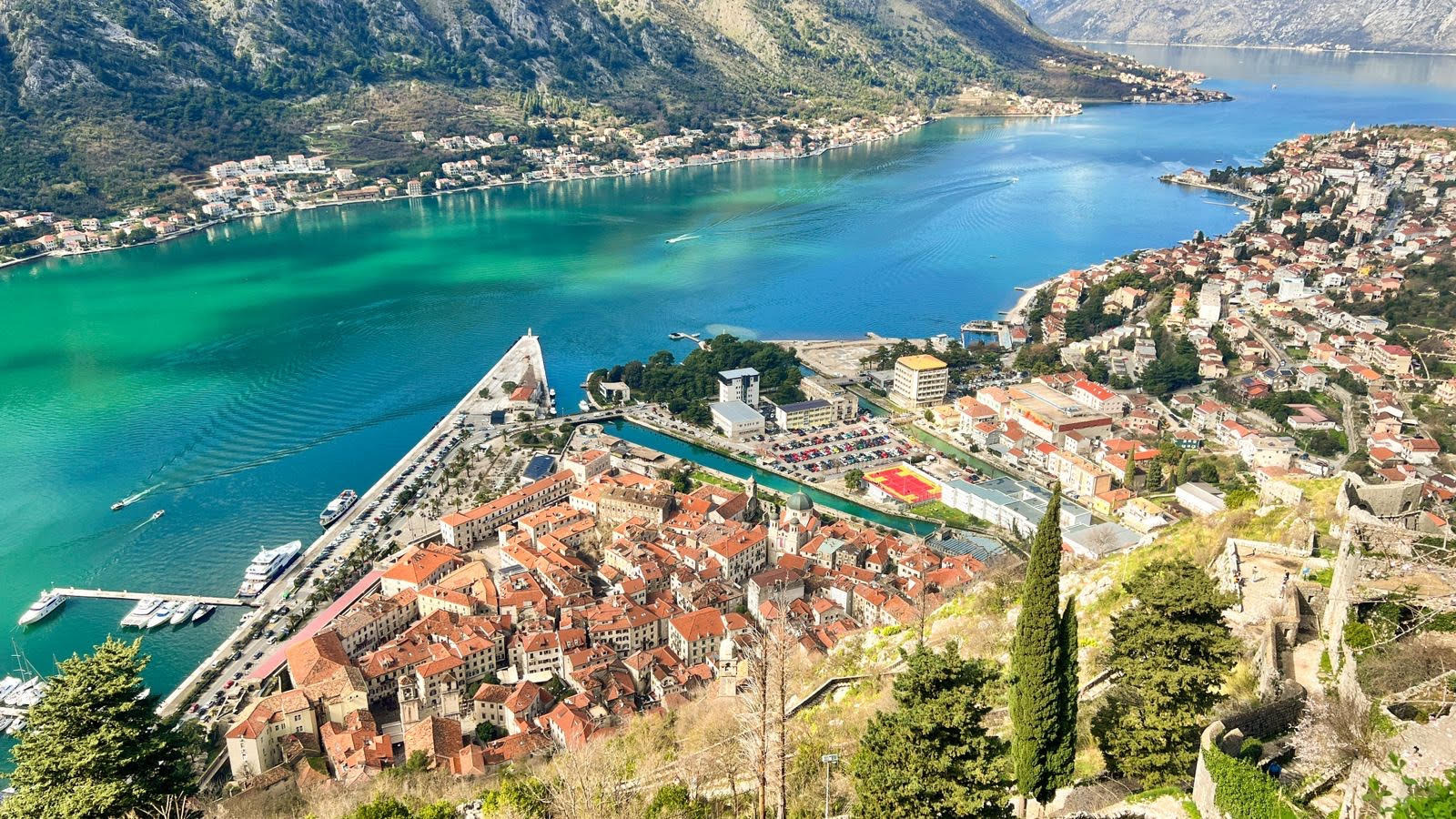
A UNESCO-listed medieval Old Town tucked into a dramatic bay ringed by mountains, Kotor is Montenegro's most celebrated historic city — and one of the most striking destinations on the entire Adriatic coast.
Few places in Europe manage to be simultaneously this ancient and this alive. Kotor sits at the innermost point of the Bay of Kotor, a deep, winding inlet flanked by steep limestone mountains that drop almost directly into the water. The setting alone would be enough to make it memorable. The fact that it also contains one of the best-preserved medieval Old Towns in the Mediterranean makes it genuinely exceptional.
The Old Town
Enclosed by walls that date back to the Venetian era and stretching up the hillside behind the city, the Old Town is a UNESCO World Heritage Site and the undisputed heart of any visit to Kotor. The main entrance is the Sea Gate, which opens onto a dense network of cobblestone lanes connecting squares, churches, and former palaces. The Cathedral of Saint Tryphon, consecrated in 1166 and rebuilt after several earthquakes, is the most prominent landmark — its twin Baroque bell towers visible from most of the Old Town. Saint Luke's Church, built in the 12th century and notable for its hybrid Byzantine and Romanesque design, is smaller and quieter, and worth seeking out. Cats are everywhere, a centuries-old local tradition that has given Kotor a minor international reputation of its own.
The Fortress
Behind the Old Town, a staircase of roughly 1,350 steps climbs up to the Fortress of San Giovanni, perched at 260 metres above sea level. The ascent takes the better part of an hour and is steep throughout, but the views from the top — the terracotta rooftops of the Old Town below, the full sweep of the bay, the mountains on every side — are among the best in the country. Starting early in the morning avoids both the heat and the crowds that arrive with the cruise ships mid-morning.
The Bay and Day Trips
The Bay of Kotor itself is one of the defining reasons to linger longer than a day. The small baroque town of Perast, about 12 kilometres north along the water, is one of the most atmospheric spots on the entire bay — a single waterfront street lined with stone palaces and church towers, with almost no traffic and a pace that has changed little in centuries. From Perast, short boat trips run out to Our Lady of the Rocks, a small artificial island with a church built on a reef, one of the more unusual landmarks in the region. To the south, Budva is a straightforward 30-minute drive and makes for an easy half-day excursion.
When to Visit
The shoulder seasons — May, early June, and September — offer the most comfortable combination of warm weather, manageable crowds, and reasonable accommodation prices. July and August bring significant heat, and Kotor's position deep inside the bay means it receives fewer hours of direct sunlight in winter, when many businesses close entirely. Cruise ships dock regularly from spring through autumn; the Old Town can feel very crowded between roughly 10am and 4pm on busy days, so early mornings and evenings are the best times to explore it at a more relaxed pace.
Getting Around
The nearest airport is Tivat, approximately 8 kilometres away by road — a 15-minute drive under normal conditions. Podgorica Airport is roughly two hours inland and serves a wider range of international routes. From Kotor, the towns of the bay are easily reached by car, local bus, or water taxi. The Old Town itself is entirely pedestrianised.
Getting there
From Podgorica Airport
90 km
From Tivat Airport
8 km